
BACKSTORY
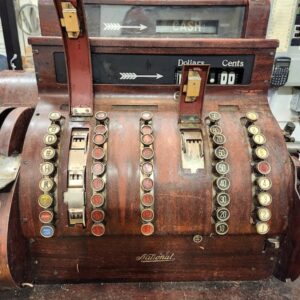
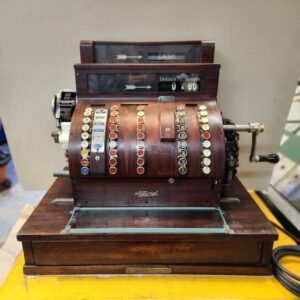
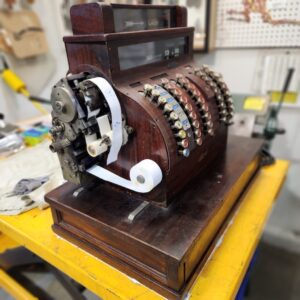
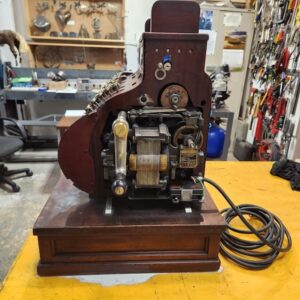
This 103-year-old, 1923-era National Cash Register 852-e spent many years in a Vancouver plumbing store owned by my client’s family. He kept it for about 36 years before choosing to restore it.
My client asked me to do my best to make it resemble how he remembered it. It didn’t need to be perfectly functional, and as you will see, some things, like getting a perfect printout of a receipt, were not possible.
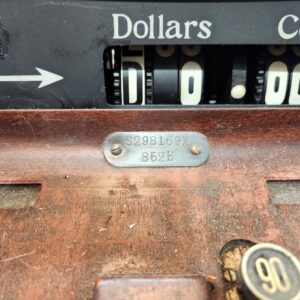
This model is electromechanical and can operate either by motor or manual cranking. The serial number has an S prefix, indicating it was returned to Toronto for service and was resold to my client’s family’s Vancouver plumbing store after 1940.
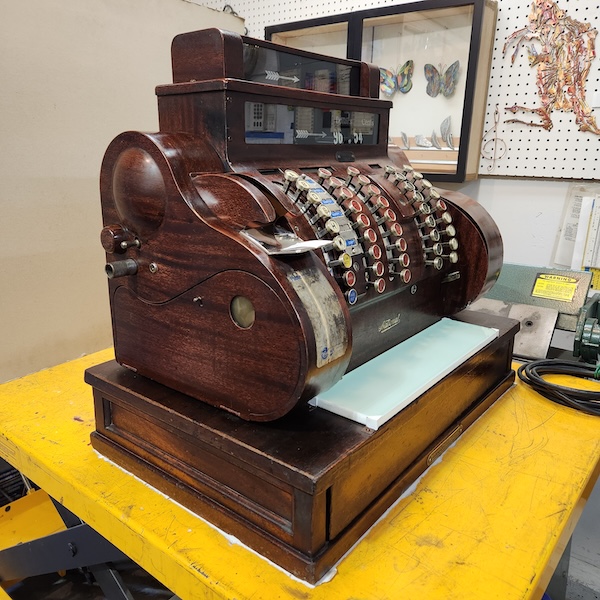
big project, many pictures
Repairing and restoring this cash register was complex and long. Before-and-after pictures hopefully capture the scope of the work involved. Enjoy!
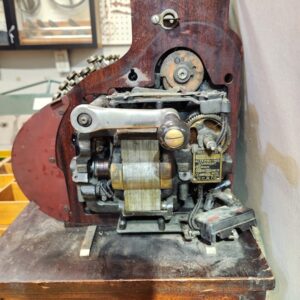
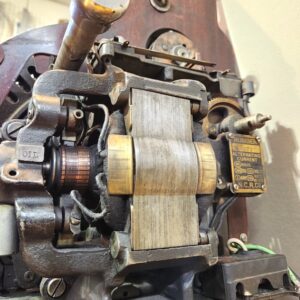
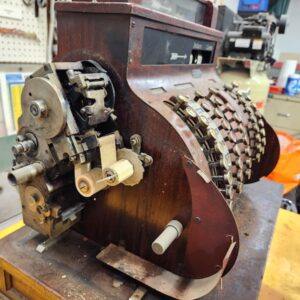
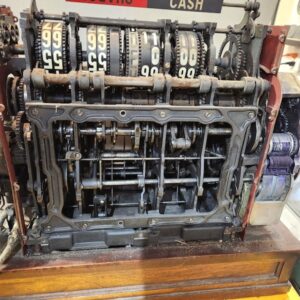
condition of the cash register
It required a lot of research and time to identify the best steps for cleaning, unjamming the mechanism, and operating this machine. From my research, I discovered that this model was the hardest to restore. Finding parts for it was nearly impossible.
It required a thorough cleaning, an electrical overhaul, and the replacement of the display glass and the special milk-glass coin plate.
One side of the register was missing its motor shield, so I eventually fabricated a new one.
Documenting every screw, lever, and key was essential, using photos and diagrams to identify their locations.
Some of the mechanical linkages were jammed.
The ten-cent coin key was not engaging the gears.
Though the cash register looked as if it were made of wood because the woodgrain appeared so realistic, the body was actually constructed from sheet steel with a woodgrain finish applied to the metal.
It would require some research to replicate the original finish.
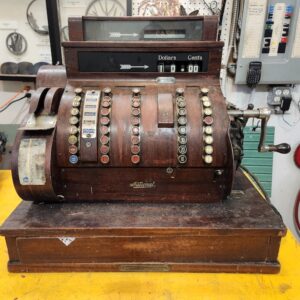
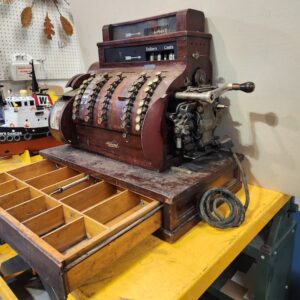
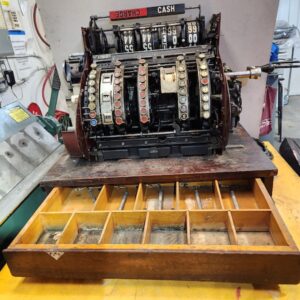
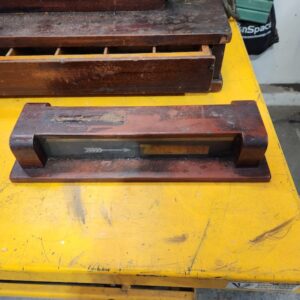
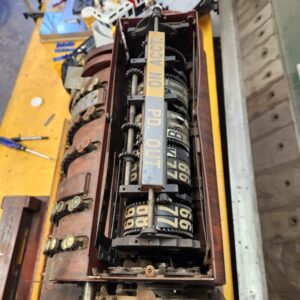
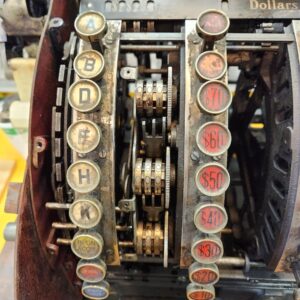
cleaning the keys and nameplate
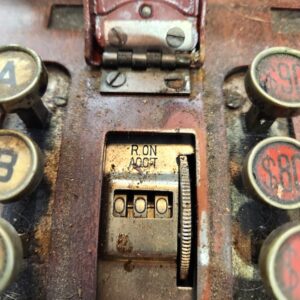
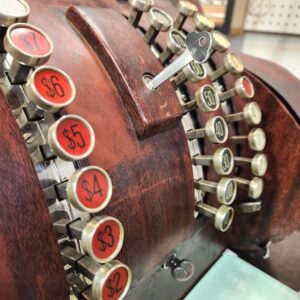
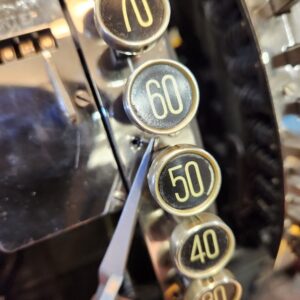
To clean the keys, I had to use a steel dental pick. Cleaning each key face was a long, tedious task because there was so much grime and finger grease in the center, around the perimeter, in the grooves, and along the outer edges of the keys. I then polished the stainless-steel escutcheons that surrounded the keys.
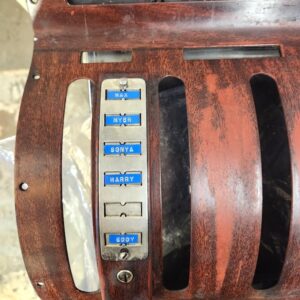
The cash register had a nameplate displaying the workers’ names and lettered keys corresponding to those names, all of which needed cleaning.
fabrication of the motor casing
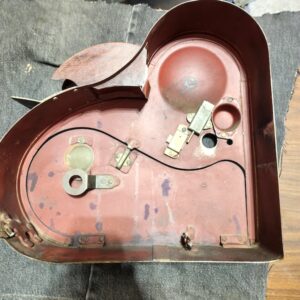
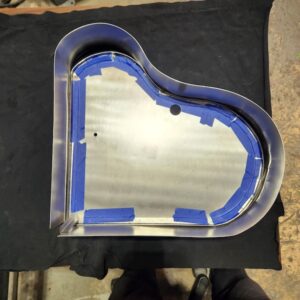
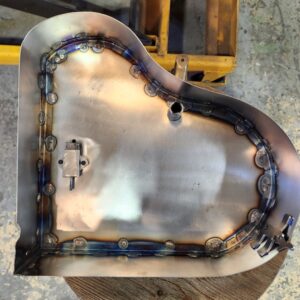
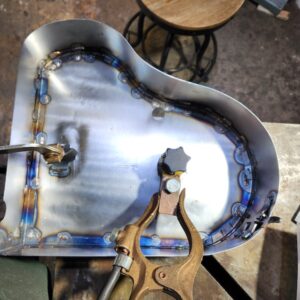
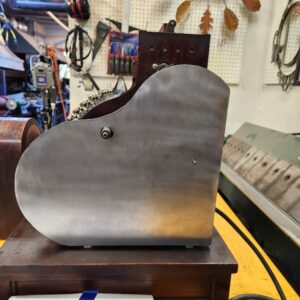
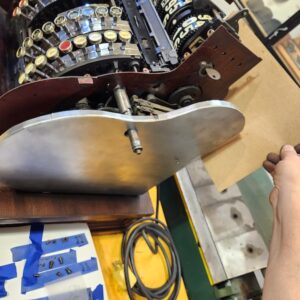
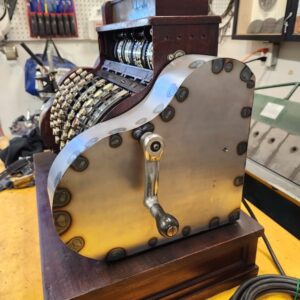
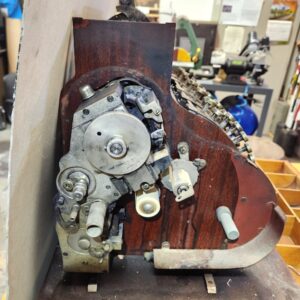
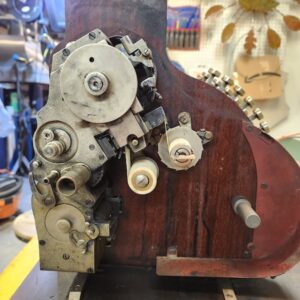
The motor was missing its protective cover and required a new one to be fabricated.
There was an angle brace around the interior of the casing to reinforce the adjoining side and edge pieces. I silver-soldered the angle brace to the interior of the casing.
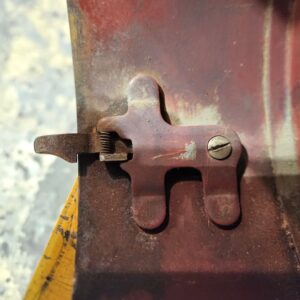
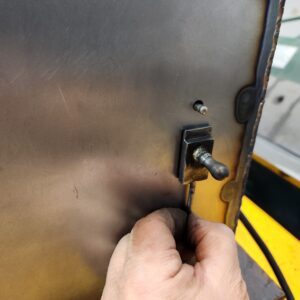
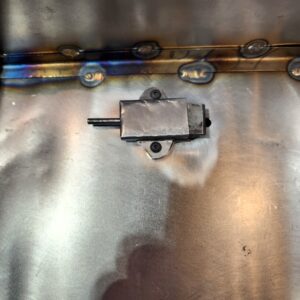
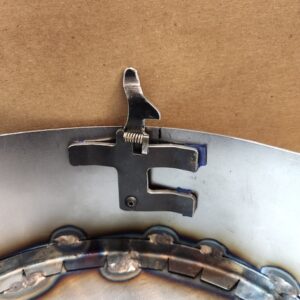
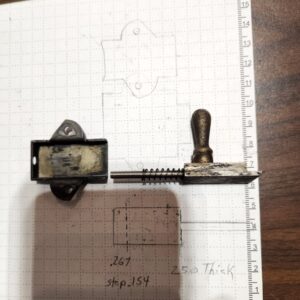
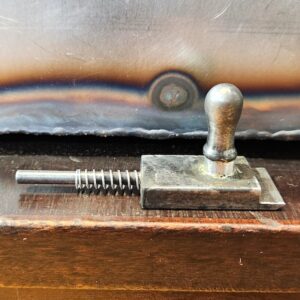
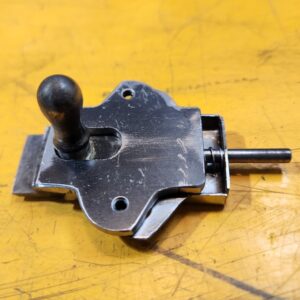
Holding the motor casing to the machine required low-profile latches. These latches had to be thin enough to fit within the casing's interior and were not commercially available, so I fabricated the correct latch style to secure the casing.
The seams of the motor casing needed bronze TIG brazing for reinforcement.
Eventually, I blended and ground the casing edges, and I painted a faux woodgrain finish.

Fabrication of MACHINE RESET KEYS
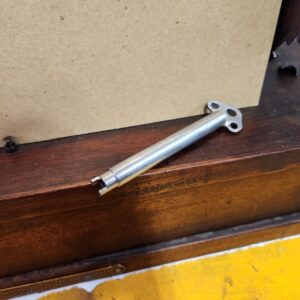
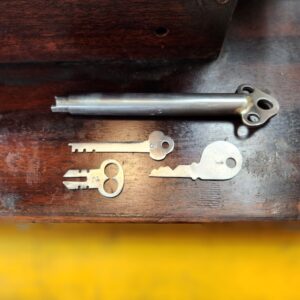
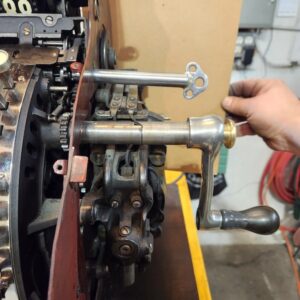
Originally, six keys were used to reset different functions. My client only had one key. From this, I gauged the size of the other keys I needed to make. I searched online for keys specific to this model, but finding the right ones felt like searching for a needle in a haystack.
I tried to buy them from the U.S., but I couldn’t be sure they would be the correct keys for the model. As it turned out, the ones I found online weren't the correct ones, just by comparing the length and cut of the keys to the one I had.
Since I’m not a locksmith, making these keys was quite tricky, even with my machinist skills.
I found pictures of these keys, printed them to scale, and traced the designs onto steel to make new reset keys. For one of them, I had no picture and had to improvise.
fabrication of the handle knob
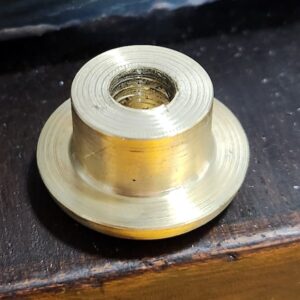
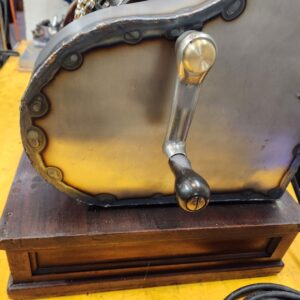
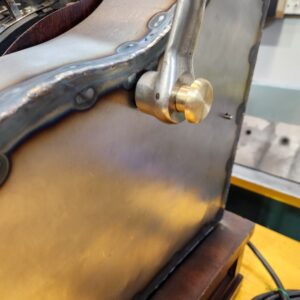
Securing the rotating manual crank handle on the register required a brass threaded knob. Though I didn’t have a source or picture to tell me what the knob should really look like, I created one that would serve the purpose.
glass coin plate
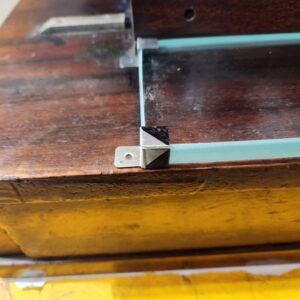
The cash register’s milk-glass coin plate tested the coins for authenticity. If the coins shattered when the clerk hit them on the glass plate, they were fakes. Milk-glass is no longer sold commercially and is very costly to reproduce. I developed a method to imitate the newer version of this glass using standard glass, painting the edges and underside white to prevent scratching the paint when used for its original purpose.
Originally, this cash register had a central hole for mounting the milk-glass. However, a central hole in the new glass would have shattered the glass coin plate. Instead, I added newly fabricated corner brackets painted to match the wood and glass.
receipt tape mechanism
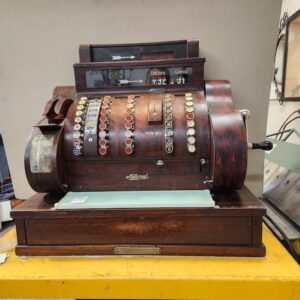
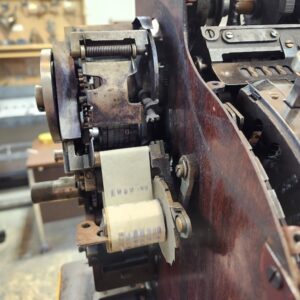
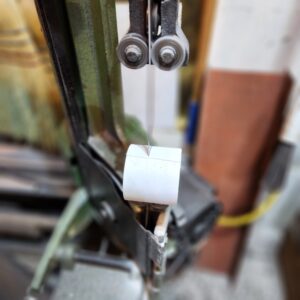
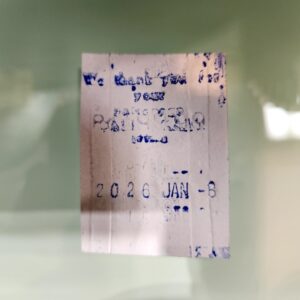
The correct size of bond paper for the receipt tape was unavailable. A modern machine requires a 2 1/4" wide tape, so I had to cut the rolls to 1 5/16" wide and smooth the edges. Threading the tape through the machine, so it could cut and dispense a receipt, was challenging.
The printed receipt tape in the picture is nearly legible. This is the best I could do to restore this part of the cash register.
Eventually, the cashier tape housing unit got a clean interior base coat paint.
cash drawer
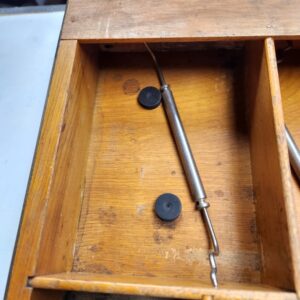
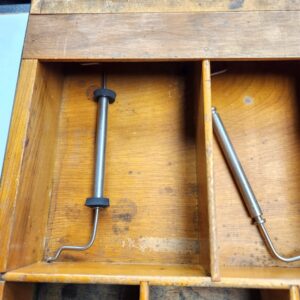
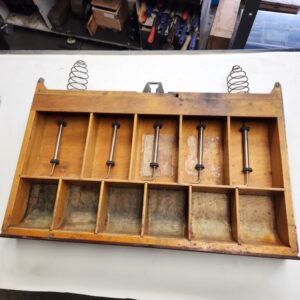
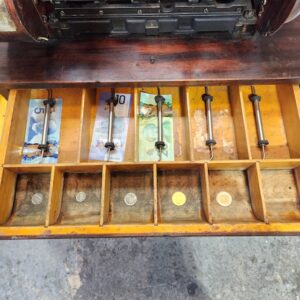
As soon as the cash register keys were pressed, the cash drawer, which barely opened when the machine arrived, burst open vigorously after I adjusted the springs and the drawer guide rail. I also made new rubber grips for the cash drawer to keep currency bills in place.
restoration of the woodgrain finish
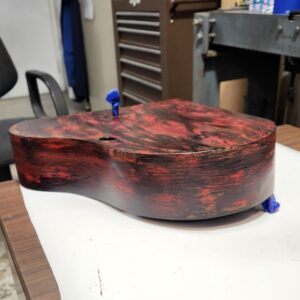
I sanded the motor case to prepare it for the eventual woodgrain finish.
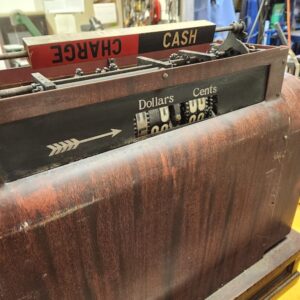
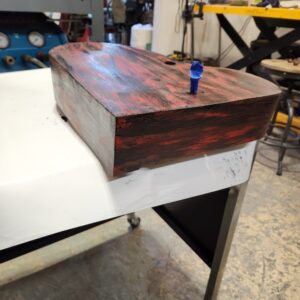
To achieve the woodgrain effect, I applied layers of pigment in different colours and used texturing techniques to closely mimic the woodgrain pattern.
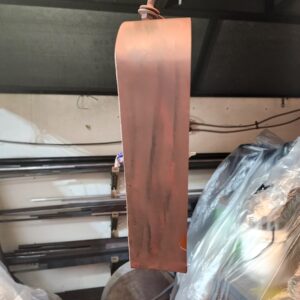
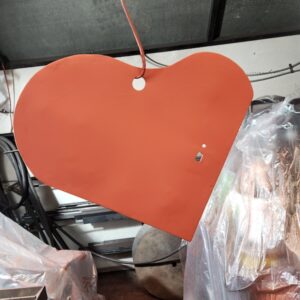
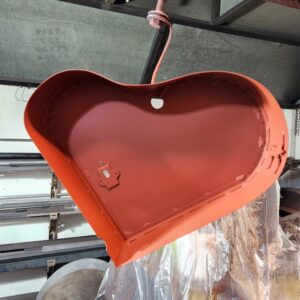
The motor case and cashier tape housing received a coat of red oxide primer to maintain a clean appearance.
A clear wax polish was applied to make this register shine.
touch-up paint
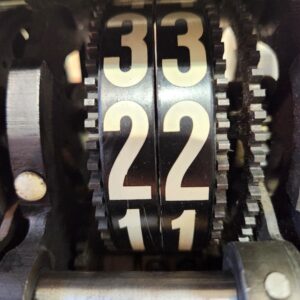
I touched up the arrow and numerals with paint, as well as in areas that were heavily scuffed.
fuses and power cord
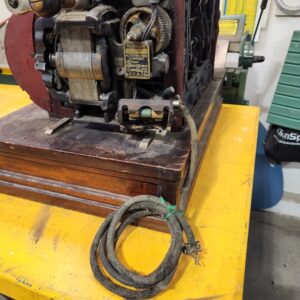
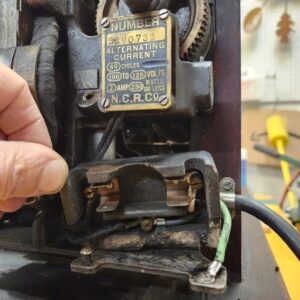
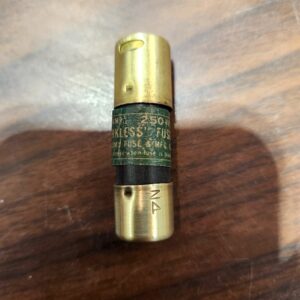
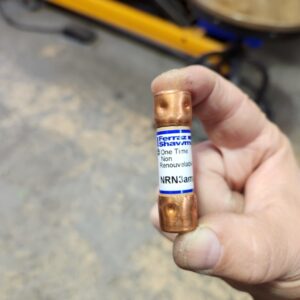
Since this is an electromechanical machine that requires a motor fuse, I had to replace it. I tested different amperages to find the best one for the motor. Fuses were hard to find, but I sourced them locally.
It all boiled down to cleaning and lubricating the cash register to ensure it operated safely without jamming, and to protect the motor.
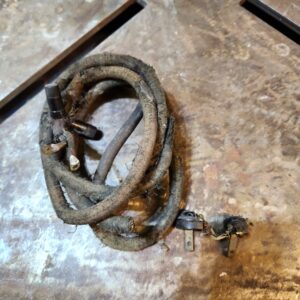
The cloth sheath on the original power cord had worn out and needed replacing. The goal was to ensure that the electrical system complied with the BC Electrical Code.
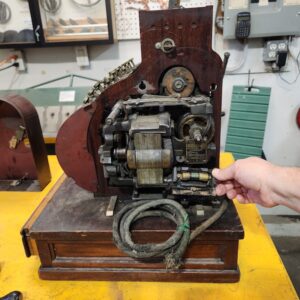
A project of this scope deserved the time and space it took to tell its story and assemble photos of this saga.
If you’ve read this far, bravo!
Miriam - The Blacksmith's Writerly Wife